Every October, National Arts and Humanities Month celebrates the artists, cultural organizations and creative experiences that help tell the stories of our communities. It is a time to recognize how creativity shapes the places we call home, preserves cultural memory and creates connections between people.
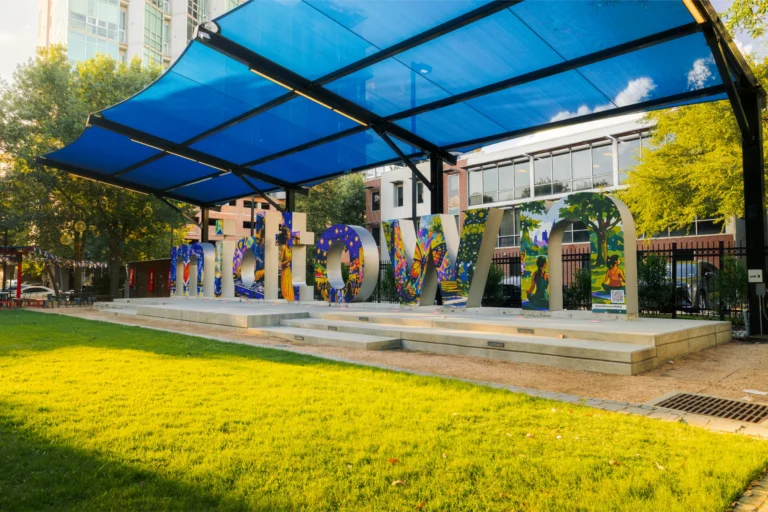
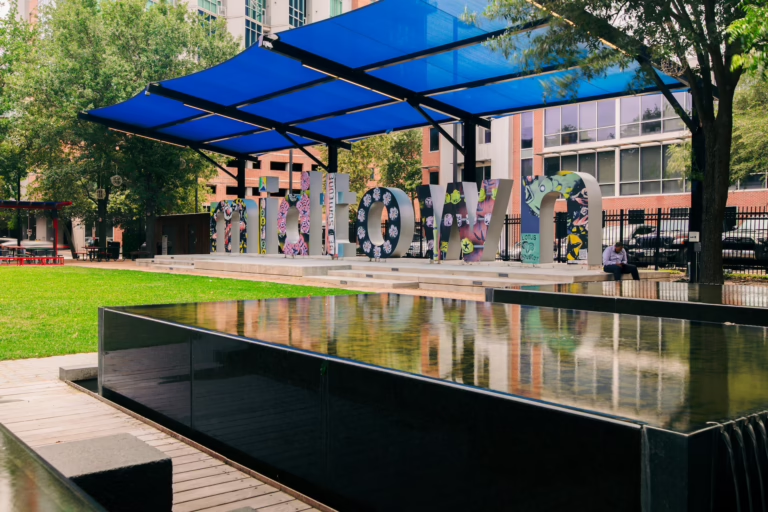
This National Arts and Humanities Month, Midtown Houston is celebrating Houston’s creative story with A Diary of a Legendary City, a new installation by Houston-based multidisciplinary artist Gerald James Rhodes.
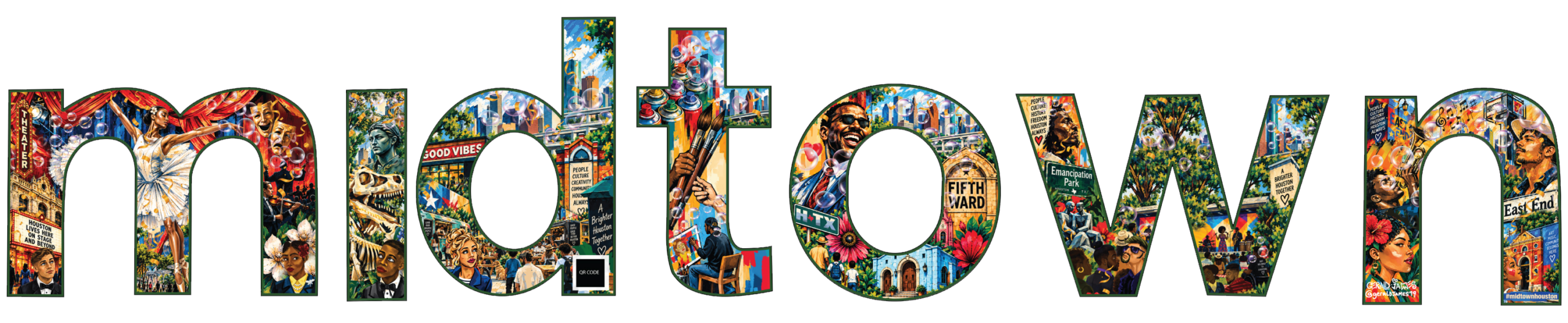
Created for the iconic MIDTOWN sign at Bagby Park, the installation turns seven letters into seven chapters of Houston’s cultural landscape. Each letter represents one of Houston’s seven state-designated cultural districts, bringing distinct histories, communities and creative traditions together in one visual story.
For Rhodes, the project is also deeply personal. A New Orleans native who has called Houston home for nearly 25 years, he describes the installation as a thank-you to the city that welcomed him and became the backdrop for decades of creating, observing and building relationships.
“From one Bayou City to another, Houston adopted me. This art installation is my thank-you to a place that became home.”
Celebrating Arts and Culture in Midtown Houston
Art is part of the fabric of Midtown Houston.
Designated as a Cultural Arts & Entertainment District by the Texas Commission on the Arts in 2012,Midtown Houston has grown into a walkable neighborhood where creativity shows up in public art, cultural organizations, community events and gathering spaces. Today, the district is home to more than 40 arts venues and 100 arts organizations. The Midtown Cultural Arts & Entertainment District connects people through arts and culture while creating opportunities to explore, gather, and experience Midtown in new ways.
National Arts and Humanities Month provides another opportunity to celebrate that creative community while looking beyond the boundaries of Midtown Houston. Houston’s cultural landscape includes seven state-designated cultural districts recognized through the Texas Commission on the Arts. They are Theater District Houston, Houston Museum District, Midtown Cultural Arts & Entertainment District, Arts District Houston, Fifth Ward Cultural Arts District, Third Ward Cultural District and East End Cultural District.
Rather than treating those districts as separate destinations, A Diary of a Legendary City brings them together, highlighting the people and experiences that connect Houston’s creative communities. Explore Houston’s seven cultural districts and learn more about the communities shaping the city’s cultural landscape.

Meet the Artist: Gerald James Rhodes
Gerald James Rhodes has spent nearly 25 years paying attention to Houston.
The New Orleans native is a Houston-based artist, art director, creative director, designer, illustrator, photographer and branding director. His multidisciplinary practice includes illustration, painting, photography, branding, writing and visual storytelling, often drawing inspiration from people, culture, neighborhoods and everyday moments.
His work has been exhibited at Lawndale Art Center, Houston and Fort Bend public libraries, Houston City Hall, East End Studio Gallery, Aurora Studios and other spaces throughout the Houston area. An Artist INC Houston alumnus, Rhodes has also earned professional recognition including an Emmy Award for Art Direction, Telly Awards and American Inhouse Design Awards.
Across mediums and projects, his creative philosophy comes back to a simple idea:
“Make something that helps people feel seen.”
That belief sits at the heart of A Diary of a Legendary City.
Rhodes’ relationship with Houston has been built through years of drawing, photographing, designing, making friendships and observing the city around him. His Houston is not defined by one skyline, landmark or institution. It is found in neighborhood walks, restaurants, grocery stores, music, art, conversations and the unexpected corners people make their own.
Those experiences became the foundation for the installation.
Seven Letters. Seven Cultural Districts. One Houston.
Look closely at the MIDTOWN sign and each letter opens a different chapter.
Rhodes assigned each of the seven letters to one of Houston’s seven cultural districts, creating a visual journey through the communities that contribute to the city’s creative identity.
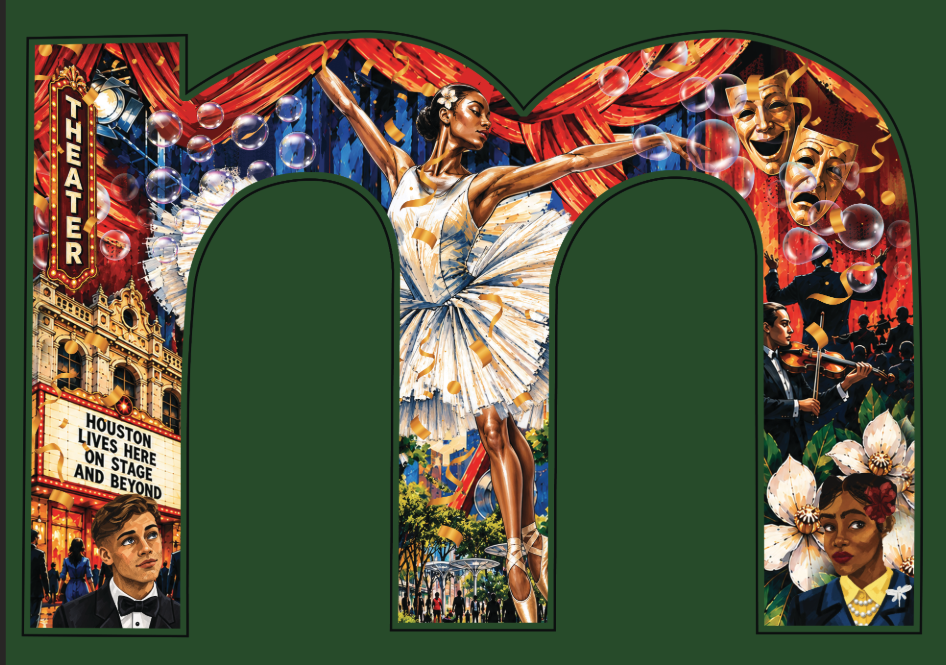
M — Theater District Houston
Performance, imagination, music and drama capture the energy of people gathering to experience something together.
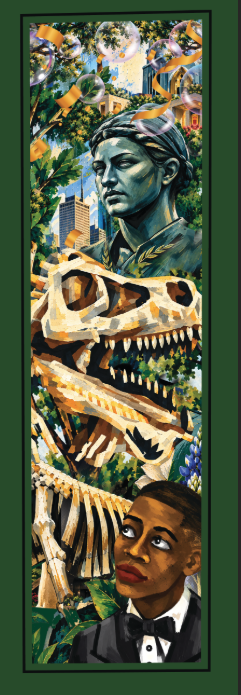
I — Houston Museum District
Art, discovery, sculpture, gardens, architecture and history reflect curiosity, knowledge and cultural memory.
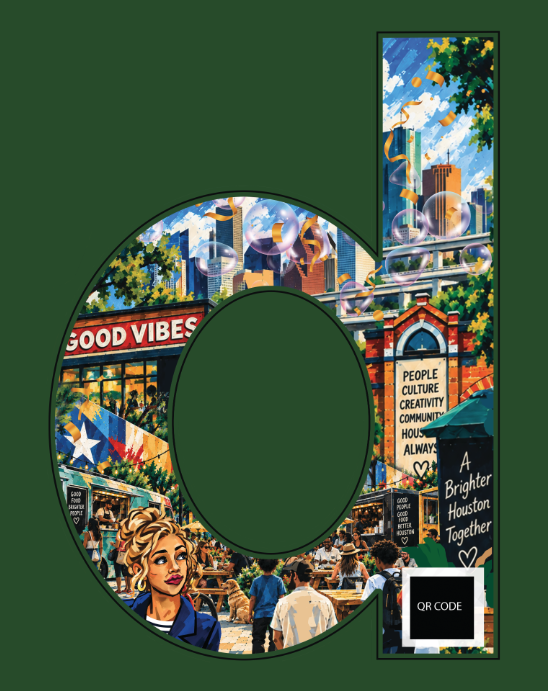
D — Midtown Cultural Arts & Entertainment District
Movement and connection come together through public art, gathering spaces, restaurants, nightlife, creativity and the everyday energy of a walkable neighborhood.
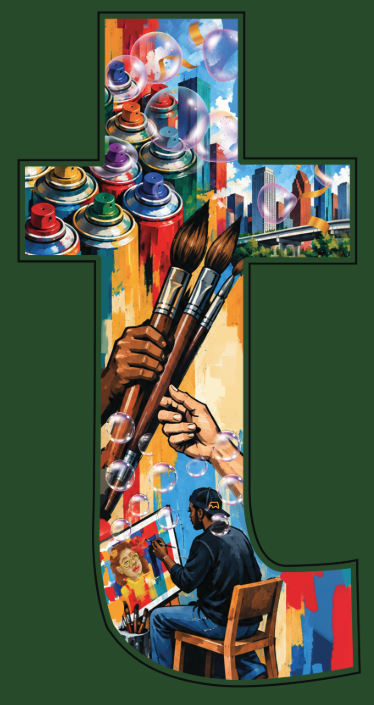
T — Arts District Houston
Artists, designers, musicians, photographers, illustrators, performers and makers represent Houston’s working creative community.
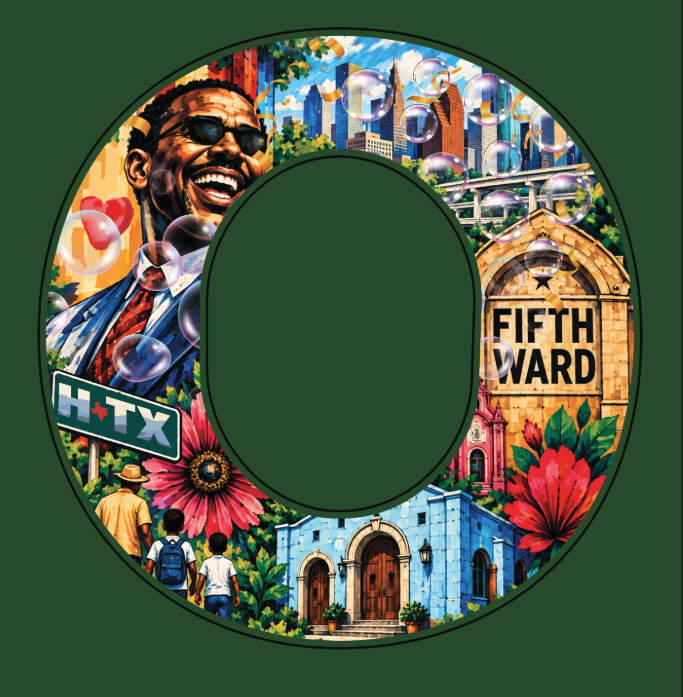
O — Fifth Ward Cultural Arts District
History, community, resilience, music, family and cultural roots reflect a neighborhood shaped by generations of stories.
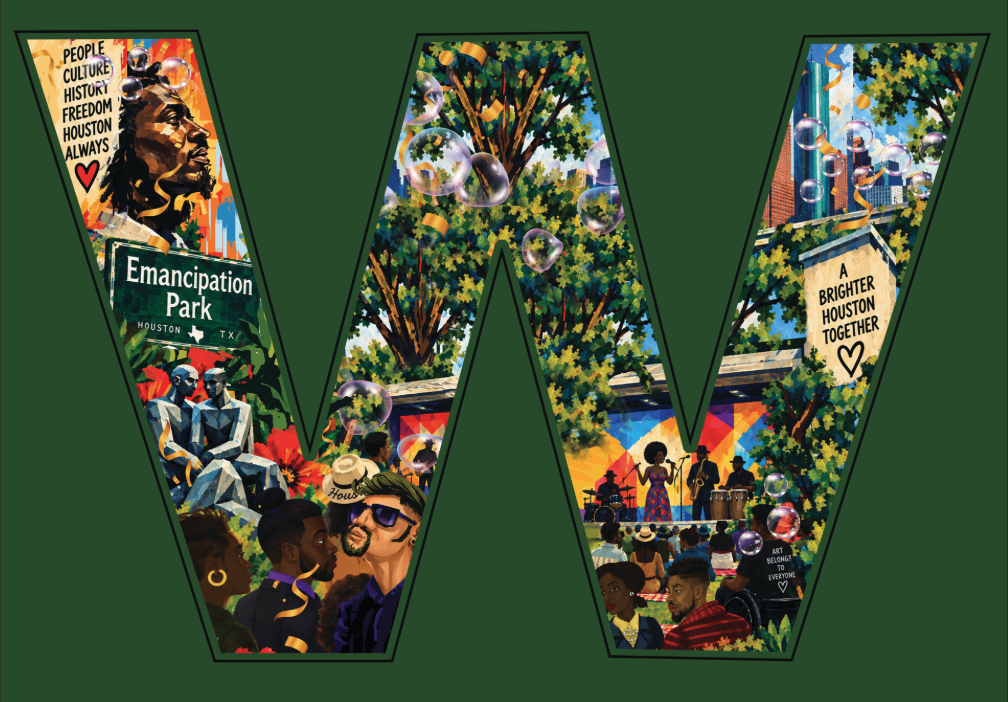
W — Third Ward Cultural District
Black cultural heritage, creativity, education, music, community and legacy honor a district deeply connected to Houston’s history and cultural memory.
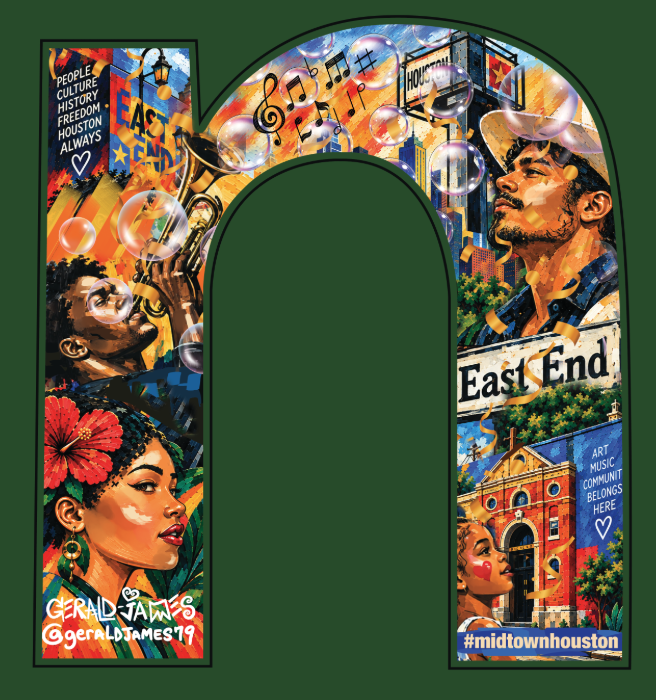
N — East End Cultural District
Heritage, food, music, architecture, family and art reflect cultures growing together and contributing to a distinct neighborhood identity.
Together, the seven letters create a portrait of Houston that recognizes each district’s individual identity while showing how their stories intersect.
A Visual Diary of Houston
The title A Diary of a Legendary City offers a clue to how Rhodes wants the installation to be experienced.
Rather than presenting a polished collection of Houston landmarks, Rhodes approached the project as something collected over time. Drawing, photography, painting, observation, memory and experimentation come together in a visual language inspired by the pages of a well-used sketchbook.
Loose ink lines, layered textures, architectural studies, portraits and everyday details create a sense of movement and discovery. The approach reflects the way people actually experience a city: piece by piece, block by block and memory by memory.
Rhodes also describes the installation as a “branding essay as much as an artwork.” His idea is that the background should speak louder than the foreground because Houston cannot be reduced to one recognizable person, building or landmark.
The people are the story.
Buildings change. Businesses open and close. Streets evolve. People move to different neighborhoods or begin new chapters of their lives. What remains are the experiences, friendships and stories attached to those places.
That perspective connects naturally to National Arts and Humanities Month. Art can document a city, but it can also help people notice it. It can preserve a memory, introduce someone to a different community or make a familiar place feel new again.
For Rhodes, that process begins by paying attention.
Keep Walking. You’ll Find Something New.
A Diary of a Legendary City is a tribute to Houston, but it is also an invitation.
Start with the MIDTOWN sign and follow the story outward. Explore another cultural district. Visit a gallery. See a performance. Notice a mural on a familiar street. Try a restaurant in a neighborhood you have not visited in a while. Pay attention to the architecture, music, businesses, parks and people along the way.
That sense of curiosity reflects Midtown Houston’s commitment to creating a community where arts and culture are visible, accessible and connected to everyday life. It also reminds us that Houston’s creative identity is not contained within one district. It is built collectively by the people and communities across the city.
As Rhodes puts it:
“Houston, I see you. I feel you. I’ve been paying attention. There’s no place like Houston. Keep walking. You’ll find something new.”
Visit A Diary of a Legendary City, now on view at Bagby Park, 415 Gray St., through November 20. Experience this visual thank-you to Houston and discover the people, places and stories that continue to shape our legendary city.